
BUSINESS SYSTEMS & CONNECTED OPERATIONS
Software shaped around
how your business works.
Replace fragmented spreadsheets and disconnected tools with a system built around your process. We connect users, data and business rules in software that is practical to operate and maintain.
SERVICE CAPABILITIES
Bring the operation into one clear flow.
Operational platforms
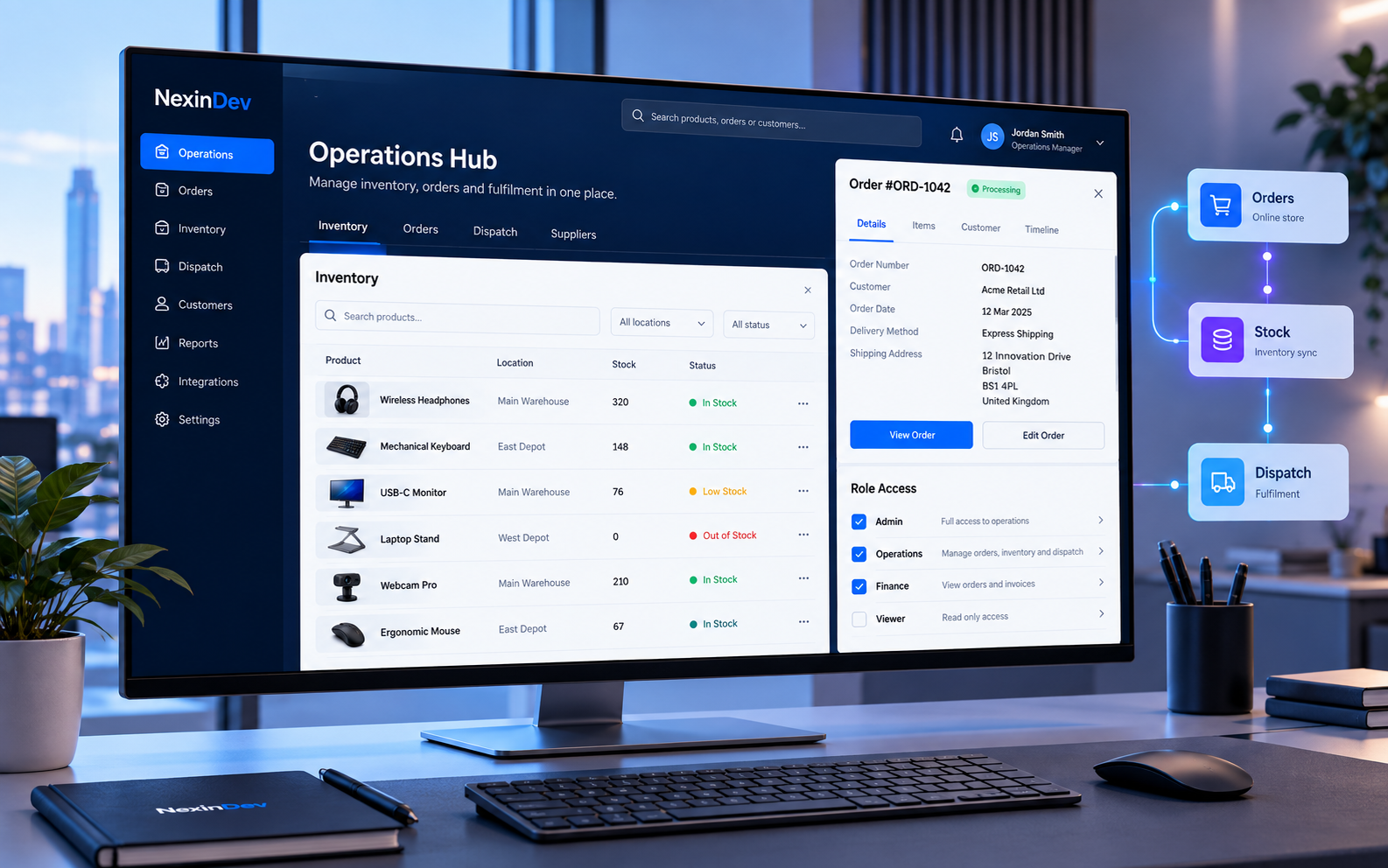
Organise orders, inventory, service tasks or other business records around your actual workflow and responsibilities.
Customer & team portals
Give each user the information and actions they need through role-based access and a consistent interface.
System & data integration
Connect existing tools through agreed APIs and data models. Plan validation, import rules and reconciliation rather than relying on manual copying.
Reporting & product foundations
Build useful views of operational data and a maintainable architecture for future features. SaaS product requirements can be scoped separately.
WHAT YOU RECEIVE
The foundations of your business system.
The final scope is agreed around your requirements. A typical engagement considers these foundations.
- Workflow map and prioritised requirements
- Data model and access-control design
- Application components and integrations
- Migration and acceptance-test plan
- Documentation, deployment and support arrangements
HOW THE WORK TAKES SHAPE
From workflow mapping to operational rollout.
Understand the operation
Map the current process, exceptions, users and sources of information.
Deliver in reviewable stages
Build the highest-priority workflow first and test it against representative business scenarios.
Introduce & support the system
Plan data migration, training, release and ongoing ownership with your team.
BEFORE YOU START
Scope, migration and future development.
When is custom software worth considering?
It is useful when existing tools cannot support an important workflow without significant manual work or compromises. We first clarify the problem and whether adapting an existing system would meet it.
Can you migrate our existing data?
Migration can be scoped after reviewing the source data, quality, volume and mapping requirements. Validation and a rollback approach are agreed before release.
Will we be able to add features later?
We plan components, interfaces and documentation around the agreed roadmap. Future changes are prioritised and scoped as the business learns from using the system.
LET’S SHAPE THE NEXT STEP
Make the workflow easier to run.
Describe the process, the tools you use today and where the friction occurs. We’ll help identify a practical starting point.